
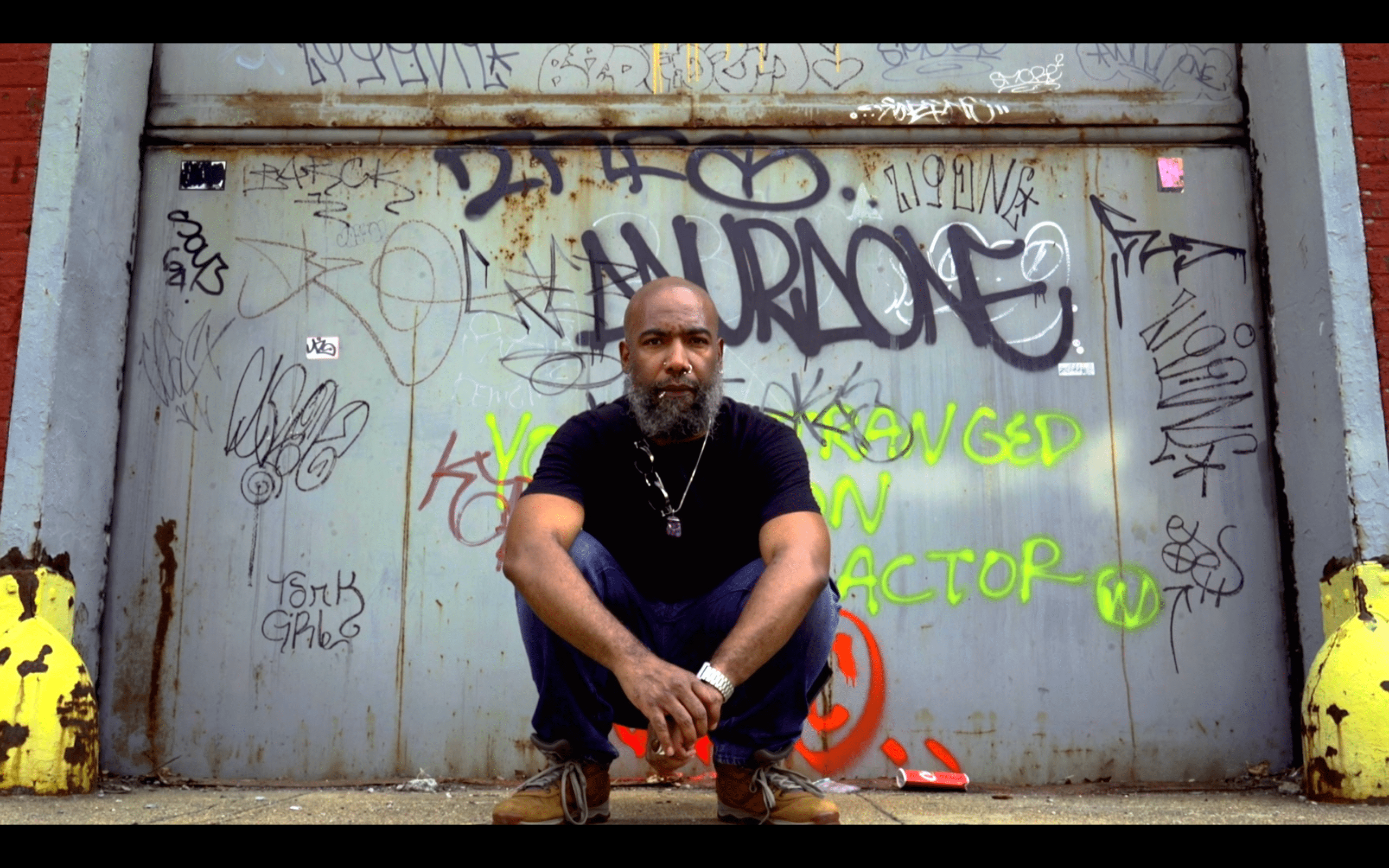
BROOKLYN, N.Y. — For Thavius Beck, making music has rarely meant staying in one lane.
Across a career spanning underground hip-hop, experimental electronic music, production, live performance and education, Beck has built an identity around versatility and a willingness to push beyond conventional genre boundaries. Now, the Brooklyn-based electronic musician is looking back on that journey with “4 Sevens,” a seven-song project released July 31 — his 47th birthday.
The title is a direct reference to that milestone, but the significance runs deeper. Beck describes the project as a personal reflection on the first 47 years of his life, with every aspect of the release handled by Beck himself. He produced the music, wrote and performed the vocals, mixed and mastered the songs and created the artwork.
The result is less a snapshot of one moment than a culmination of the many roles Beck has occupied throughout his career.
Originally from Minneapolis, Beck began playing alto and tenor saxophone and bass guitar before discovering samplers and sequencers at age 12. After moving to Los Angeles at 16, he began releasing solo material under the name Adlib and helped form the hip-hop collective Global Phlowtations, becoming part of the city’s underground hip-hop community.
As Los Angeles’ experimental beat movement developed, Beck became a fixture in the scene surrounding Low End Theory, the influential club night that became a gathering place for producers, DJs and artists exploring the outer edges of hip-hop and electronic music. Beck performed there numerous times and appeared on the event’s first flyer.
His career expanded well beyond Los Angeles after signing with independent label Mush Records in 2003. Releases including “Decomposition,” “THRU” and “Dialogue” helped establish Beck as a solo electronic artist, while touring took his music across the United States, Europe and Brazil, along with a performance in Moscow.
Along the way, Beck’s production and remix work connected him with artists across hip-hop, rock and alternative music. He has produced for or completed official remixes involving Saul Williams, Zack de la Rocha, Nas, Trent Reznor, Cedric Bixler-Zavala, Ras Kass and Skylar Grey. He has also served as music director for Williams and Grey, translating his studio experience into live performance.
His work has extended into visual media as well. Beck scored the feature-length film “Suicide Girls Must Die” and has had music licensed for commercial projects.
Yet performing and producing represent only part of his career.
For roughly 15 years, Beck has also worked as an electronic music educator, teaching production through classes, workshops and tutorials. He became an Ableton Certified Trainer in 2009 and a Bitwig Certified Trainer in 2015. He later became the first full-time professor hired at BerkleeNYC, where he taught for five years.
That combination of musician, producer, engineer, performer and educator is why Beck prefers the broader description of “electronic musician.” His work draws from a range of styles rather than adhering to a single category, often combining heavy low-end production with unconventional influences and emotionally driven songwriting.
Maintaining that creative drive, however, has required balancing artistic ambition with responsibilities outside music.
Beck has been a parent for nearly 30 years, and much of his adult life has involved navigating the tension between providing for his family and preserving the uncertainty that fuels his creativity. His experience in a stable, salaried academic position ultimately reinforced something he had learned through years as an independent musician: uncertainty can be productive.
Rather than viewing the constant search for opportunities as an obstacle, Beck has come to see it as part of his creative identity. The need to pursue new projects, develop new skills and continually find another path forward keeps him from becoming stagnant.
That philosophy is embedded in “4 Sevens.”
The project is both retrospective and forward-looking — a record informed by decades spent making music while demonstrating that Beck remains interested in creating on his own terms. With no outside vocalist, producer, mixer, mastering engineer or visual artist shaping the finished product, the seven tracks offer an unusually complete representation of Beck’s creative perspective.
At 47, he is also looking beyond the traditional boundaries of releasing records.
Beck wants to increasingly combine his music with another passion: shooting and editing video. Future projects could merge original visual work with his own compositions, while his interest in scoring and licensing music for film and other media continues to grow.
Collaboration remains another priority. As a producer, Beck hopes to work with artists who have something meaningful to communicate and are willing to challenge familiar sonic conventions.
For Beck, however, the goal of “4 Sevens” is not simply to promote another release. It is an introduction — or reintroduction — to the full scope of a career that has moved from Minneapolis to Los Angeles to Brooklyn, from underground hip-hop clubs to international stages, classrooms and film work.
After decades spent producing, performing, teaching and experimenting, Beck is positioning himself not around one title or one project, but around the ability to help create something distinctive — whether behind the microphone, behind a mixing desk, onstage, in a classroom or behind a camera.
“4 Sevens” represents where those experiences meet: seven songs created by one artist, released on his 47th birthday, reflecting a life built around refusing to stand still.
More News, KinoBeats and Curren$y Bring New Life to “Barbed Wire Fence” With Star-Studded Remix



macconthemoon Connects Houston Roots and Personal Growth Through “Lettin Geaux”
October 07, 2026