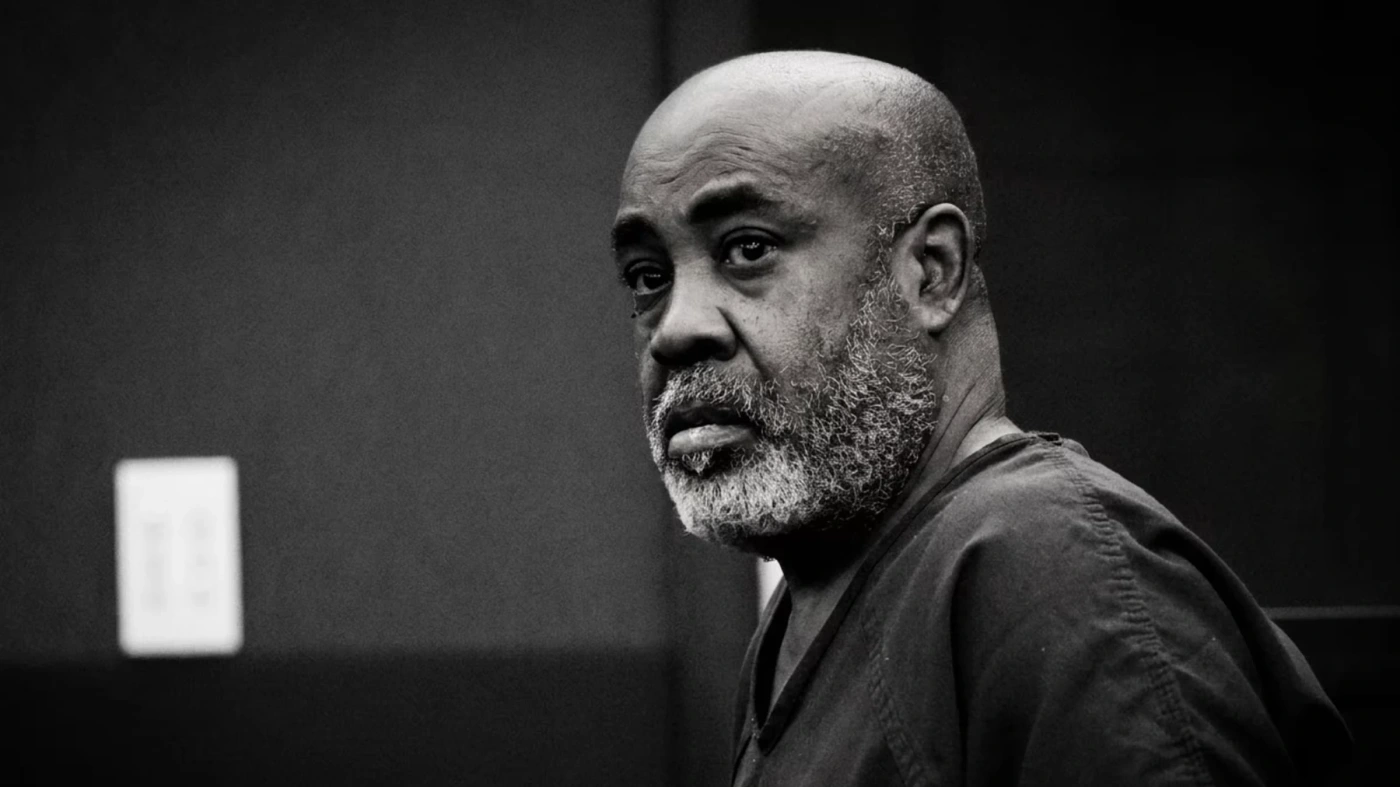
Nearly 30 years after Tupac Shakur was fatally shot in Las Vegas, prosecutors are asking a jury to hold Duane “Keffe D” Davis responsible for one of the most infamous killings in music history.
The Tupac Shakur murder trial has turned a case that spent decades without a criminal charge into a detailed courtroom examination of the rapper’s final night, the rivalry surrounding Death Row Records and statements Duane “Keffe D” Davis made long before he became a defendant.
Davis, now 63, has pleaded not guilty to murder with the use of a deadly weapon and maintains prosecutors cannot prove he orchestrated the September 7, 1996 shooting. The state’s theory begins with the MGM Grand confrontation after the Mike Tyson-Bruce Seldon fight, when surveillance video captured Shakur, Marion “Suge” Knight and others attacking Davis’ nephew Orlando “Baby Lane” Anderson.
Authorities allege that beating triggered the retaliation that followed hours later, when a white Cadillac pulled alongside the BMW carrying Shakur and Knight and gunfire erupted. Shakur died six days later, on September 13, 1996, at age 25.


Davis has never been accused of personally firing the fatal shots. Prosecutors instead contend that Nevada law makes him criminally responsible because he allegedly obtained a weapon, helped organize the retaliation and rode in the Cadillac during the attack. That legal distinction is crucial: the state does not have to establish that Davis pulled the trigger if jurors find beyond a reasonable doubt that he knowingly aided or encouraged the murder.
The prosecution has linked Anderson, Terrence “T-Brown” Brown and DeAndre “Dre” Smith to the Cadillac as well, but all three died before Davis was arrested. Anderson denied involvement before he was killed in an unrelated 1998 shooting, and authorities never charged him in Shakur’s death.
Some of the prosecution’s most closely scrutinized evidence comes from Davis’ own words. He spent years publicly discussing the shooting in interviews, documentaries and his 2019 memoir, Compton Street Legend, describing himself as being in the Cadillac’s front passenger seat. Investigators have also examined statements from a 2008 proffer session conducted under an agreement restricting how his words could be used directly against him.
Prosecutors argue Davis later repeated important details publicly outside that protected setting. His defense counters that he exaggerated or fabricated stories for notoriety and financial gain, making the reliability and context of those admissions one of the central battles in the trial.
The defense has also emphasized the extraordinary passage of time and the evidentiary gaps created by nearly three decades. Davis’ attorneys have challenged witness memories, questioned whether investigators can separate provable facts from years of rumor surrounding hip-hop’s most famous unsolved murder, and stressed that the murder weapon has never been recovered.
With the other alleged occupants of the Cadillac dead, prosecutors cannot put them on the witness stand to corroborate their reconstruction of the shooting. The defense’s broader argument is that repeatedly telling a dramatic story does not automatically make it reliable evidence, while prosecutors maintain Davis knew details because he participated in the events he described.
Davis was arrested in September 2023 after Las Vegas police searched a Henderson, Nevada, home connected to his wife that July. A Clark County grand jury indicted him soon afterward, making him the first person ever criminally charged in Shakur’s murder.
The arrest transformed decades of investigative work into a prosecution that now asks jurors to evaluate old physical evidence alongside witness testimony and Davis’ much newer public statements. It also raises a question that has followed the case since his arrest: whether talking openly about a crime that had gone unprosecuted for decades ultimately supplied investigators with the evidence they needed to bring it into court.
The proceedings have been particularly difficult for Shakur’s relatives. His sister, Sekyiwa Shakur, recently told Law&Crime Network that the family has “no expectations, or low expectations” for the criminal justice system, underscoring the complicated meaning of a trial arriving almost 30 years after her brother’s death.
During testimony on August 18, relatives left the courtroom as jurors were shown autopsy photographs and heard forensic testimony about Shakur’s fatal wounds. The evidence has forced the family to revisit the physical reality of a killing that long ago became part of music history and popular culture.
Whatever verdict jurors reach, the trial represents the most consequential legal examination of Tupac Shakur’s 1996 murder since the night he was shot. A conviction would establish criminal responsibility for the first time in a case synonymous with unanswered questions, while an acquittal would leave prosecutors without another living defendant among the men they have linked to the Cadillac.
The ultimate issue is narrower than the decades of theories surrounding Shakur’s death: whether prosecutors can prove beyond a reasonable doubt that Keffe D knowingly participated in the plan that ended with the rapper being shot on a Las Vegas street.
More News, 2Pac’s Sister Sekyiwa Shakur Says Family Has ‘Low Expectations’ for Justice in Murder Trial