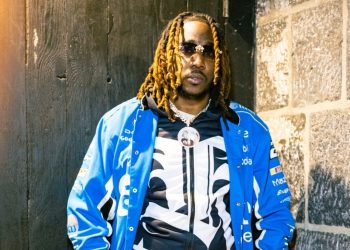

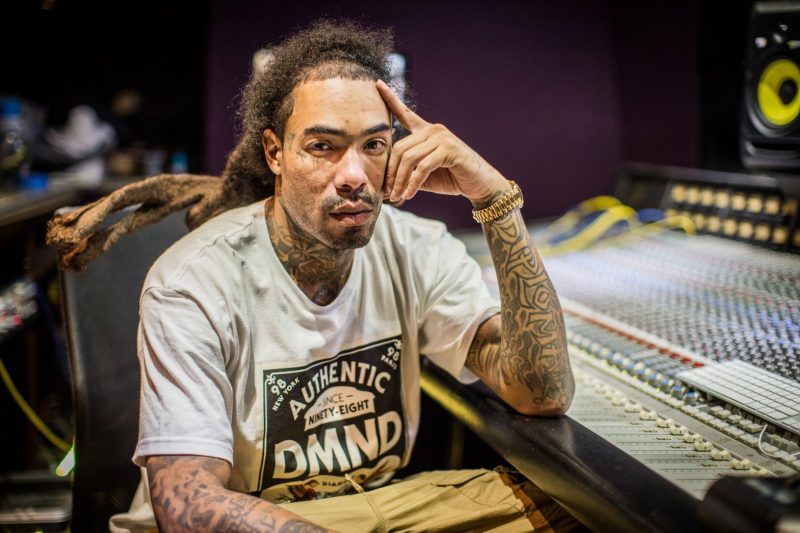
For much of his early career, Gunplay embodied the volatile intensity that defined a particular era of hip-hop. Emerging as a standout member of Triple C’s—the crew that helped propel Rick Ross into mainstream dominance—Gunplay’s ferocious delivery and unfiltered street narratives made him impossible to ignore. As part of the Maybach Music Group (MMG) roster during its most culturally dominant years, he became a recognizable face of a movement that thrived on luxury rap aesthetics fused with raw, hard-edged realism. That same era, however, was also marked by highly publicized rivalries, most notably his heated feud with 50 Cent, reflecting a time when hip-hop thrived on confrontation as much as creativity.
Fast forward to today, and Gunplay’s story reads less like a tale of unchecked aggression and more like a case study in survival, growth, and reinvention. The artist who once leaned heavily into chaos and conflict has quietly evolved into a calculated, business-minded executive and a more reflective musician. This transformation is not accidental, nor is it merely the result of time passing. It represents a conscious recalibration of priorities—one that places longevity, ownership, and artistic purpose at the center of his career.
Where early Gunplay records were defined by explosive energy and confrontational bravado, his recent work reveals a subtler intensity. The edge remains, but it is now sharpened by perspective. His lyrics carry the weight of experience, speaking less about proving dominance and more about understanding consequence, resilience, and legacy. This evolution mirrors a broader shift seen among veteran artists who have navigated the industry’s highs and lows and emerged with a deeper appreciation for control over their narrative.
That maturity extends beyond the music itself. As a CEO, Gunplay has stepped into a role that demands strategic thinking and long-term vision. Rather than relying solely on legacy affiliations or nostalgia, he is actively building infrastructure—his own platform, his own team, and his own lane. In an era where artist independence and ownership have become central conversations, Gunplay’s pivot positions him not just as a performer, but as an operator who understands the mechanics of the business he once simply survived within.
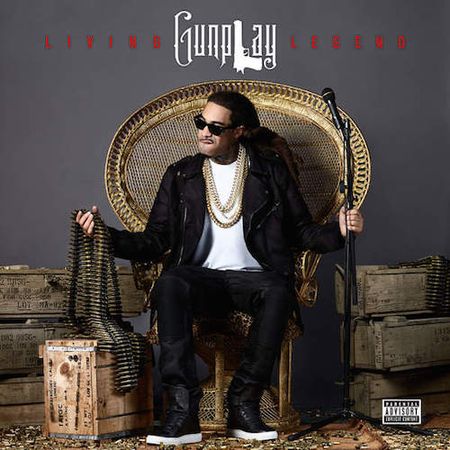
This week marks a pivotal chapter in that ongoing evolution. Gunplay is preparing for a major media run designed to reassert his presence on a national scale. Appearances across influential hip-hop podcasts, high-visibility interview platforms, and televised performance spaces are set to roll out in a carefully coordinated push. The objective is clear: reconnect with longtime supporters while introducing his refined artistry to a broader, younger audience. Rather than chasing virality, the strategy appears focused on credibility, storytelling, and sustained relevance—elements often missing from rushed comeback narratives.
Fueling this resurgence is the announcement of a multi-million dollar deal for an upcoming album and four singles, slated for release in 2026. The magnitude of the agreement signals more than financial success; it represents renewed institutional confidence in Gunplay’s artistic and commercial viability. In an industry that often sidelines artists once their initial momentum fades, such an investment speaks volumes. It suggests that decision-makers see not only proven talent, but untapped potential waiting to be fully realized.
The extended timeline leading into 2026 is particularly telling. Rather than forcing a quick turnaround, the window allows for deliberate creative development and a methodical rollout. This approach opens the door for a more cohesive body of work—one that balances Gunplay’s signature grit with the refined storytelling and sonic experimentation that today’s audiences increasingly value. The inclusion of four lead singles offers a measured reintroduction, giving listeners time to acclimate to this evolved version of the artist while building anticipation organically.
Beyond Gunplay himself, the deal carries broader implications for the national hip-hop landscape. In recent years, the industry has oscillated between short-form viral stars and deeply established legacy acts. Gunplay occupies a compelling middle ground: a veteran with authentic street credibility who is now aligning that foundation with executive acumen and strategic branding. Investing heavily in an artist of his profile suggests a growing appetite for narratives rooted in endurance, growth, and authenticity—qualities that resonate in a culture increasingly skeptical of manufactured hype.
Gunplay’s resurgence is not framed as a redemption arc in the traditional sense, nor is it an attempt to relive past glory. Instead, it reads as a recalibration—an artist reclaiming control, redefining success, and stepping into a phase where impact matters more than noise. As the media appearances roll out and the road to 2026 unfolds, one thing is clear: Gunplay is no longer fighting for a seat at the table. He’s building one of his own, and inviting the industry to take notice.