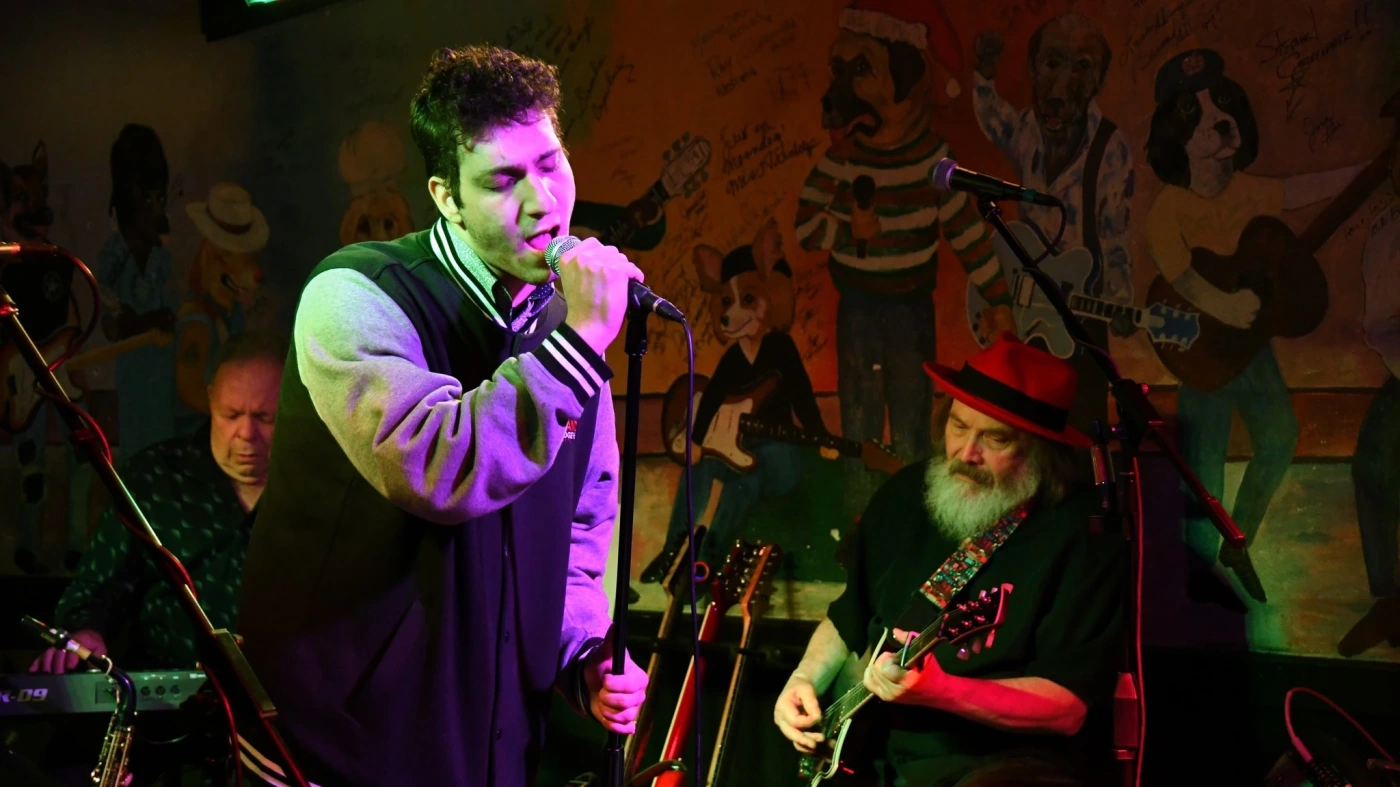
There are records that tell you what happened, and there are records that tell you what it felt like. Cello’s Singing to Serpents belongs firmly to the latter tradition.
Across nine songs, Cello, born Marcello Valletta, writes as though the distance between thought and lyric has been deliberately shortened. The resulting album can be restless, wounded, spiritual, angry and unexpectedly tender, sometimes within the same song. Its imperfections aren’t distractions from the experience. They are the experience.
Opening track “Stay Here” establishes the vocabulary. The title sounds reassuring until you hear the desperation beneath it. Cello turns a simple request into something almost compulsive, repeating ideas until they begin to resemble thoughts circling a sleepless mind. He isn’t describing longing from a safe distance. He puts the listener inside it.
That tendency toward emotional fixation continues throughout Singing to Serpents. “Elevate” reaches for confidence while leaving enough uncertainty around the edges to make that confidence believable. “Sucks to Be Used” is tougher, carrying the sting of somebody discovering that anger doesn’t necessarily erase hurt.
Cello isn’t particularly interested in appearing noble. That’s one of his strengths.
His narrators contradict themselves, want things they probably shouldn’t want and occasionally confuse desire with salvation. On “Full Moon” and “Cravings,” attraction becomes something primal and uneasy. “So Long” examines separation without pretending that saying goodbye automatically provides closure.
https://www.youtube.com/watch?v=9CP_DCxAFIQ
Musically, Cello doesn’t settle easily into a category. Alternative pop, hip-hop inflections, atmospheric textures and singer-songwriter confession mingle throughout the record. His background in poetry can be felt in his concern with language, while his experience as an actor surfaces in the way he inhabits a lyric rather than simply sings it.
There’s another part of Cello’s story that deserves attention. He is autistic and has ADHD, and he has become increasingly open about neurodivergence and advocacy. That knowledge offers context for the album’s repetition, intensity and unconventional emotional movement without becoming a convenient explanation for everything interesting about it.
What matters is how Cello turns his particular way of experiencing life into communication.
That’s what folk music, at its broadest and best, has always done.
The album’s spiritual heart arrives with “Pray” and “Faith.” Cello doesn’t approach belief as someone handing down answers. He approaches it as someone needing them. The distinction is enormous. “Faith” is compelling precisely because certainty remains elusive; belief becomes an action rather than a possession.
Then “Sleeping” closes the record like the room finally going quiet after an argument.
The title Singing to Serpents ultimately feels less threatening than compassionate. The serpents are the things we’d rather avoid: obsession, insecurity, anger, temptation, loneliness, fear. Cello’s instinct isn’t to pretend they aren’t there.
He sings to them.
And somewhere in that conversation, something remarkably human emerges.
Singing to Serpents doesn’t offer the reassuring sound of an artist who has conquered his demons. It offers something more useful: the sound of somebody learning their names, sitting beside them and turning the encounter into songs.
Sometimes that’s where healing begins.
Stream Singing to Serpents
Follow Cello

Joe Budden Rips Kanye West’s Big Sean Reunion as ‘Corny’ Despite Enjoying the Moment
September 07, 2026
J. Cole Says Jay-Z’s Patience Helped “Wet Dreamz” Become a Career-Defining Record
September 07, 2026