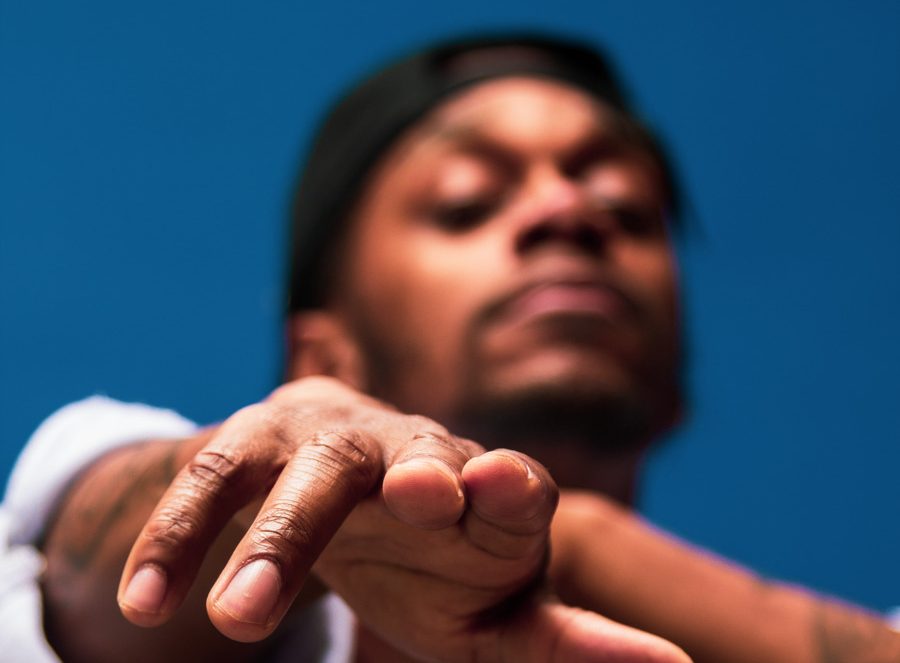

Some artists find music. Others are shaped by it. Duce Phoenix falls into the second category—an artist whose story is rooted in early ambition, personal evolution, and a constant pull toward expression. From selling burned mixtapes out of a high school backpack to navigating life’s hardest transitions, his journey reflects more than a pursuit of fame—it reflects survival, faith, identity, and transformation.
In this candid interview, Duce Phoenix opens up about the defining moments that pushed him toward music, the creative habits that fuel his sound, and the spiritual and personal battles that have reshaped his purpose. What emerges is not just an artist story, but a human one—layered, honest, and still unfoldin.
When did you first realize rap was more than just a hobby for you, and what was the moment that made you say, “This is it”?
I knew that rap was more than a hobby for me when I decided to burn CD’s of my mixtapes in high school and sell them out of my backpack. I didn’t realize there were so many people who wanted to listen to what I had to say. I felt grateful but I also made well over a hundred dollars that day. A hundred dollars isn’t much these days but for a 16-year-old kid back then I felt like I cracked the code of becoming rich! lol.
After that there were subtle defining moments that made me realize I was born for this. The way people looked at me after hearing me rap or sing for the first time, the reaction from the crowd at my high school pageant after a performance I had rehearsed over a thousand times and still beat myself up over it because it didn’t feel perfect. But after hearing the applause and cheering so loud I realized it didn’t have to be perfect. Then I thought to myself, this is it—if I could do this for the rest of my life I’d be ok.
I even did a freestyle remix to my high school pep song, “We Are Family” by Sister Sledge. They used to play it over the intercom every Friday. It used to annoy me so bad until I went home and recorded a 16, burned it on a CD, and gave it to the woman in charge of announcements. Ever since that day, every Friday they played my version. A friend recently told me they still play it to this day. That moment showed me impact early.
When you’re writing, do you start with the beat, the lyrics, or a feeling you want to capture?
When writing I almost always start with the beat. Every now and then I’ll start with a feeling I want to capture, but if I come across a beat that captures that feeling, the cadence and lyrics usually come without hesitation.
For a long time I relied on YouTube for beats but didn’t have the money to pay for them, so when my mom moved us to Atlanta I went to school to learn how to make my own beats. Still, every once in a while I’ll find beats on YouTube that I like. And now that I’m making adult money I can pay for them lol.
Which artists or life experiences have shaped your style the most, and how can listeners hear that influence in your music?
Growing up I listened to 50 Cent, Eminem, Lil Wayne, Drake, and Yo Gotti. Eventually that turned into artists like Tory Lanez, Moneybagg Yo, Joyner Lucas, and Huncho.
Ironically, most of those artists don’t sound alike at all, which is probably what makes me different. I’d like to think I’m all of them wrapped into one. I’ve learned to develop my own sound, but some people might hear Drake in my singing, others might hear 50 Cent or Meek Mill when I rap. It just depends on what bag I’m in.
Over time I’ve embraced my own voice. I don’t think I sound like anybody—I’m just me. And I think eventually people will hear that too.

If someone had never heard your music before, which one track should they start with, and why?
It depends on what you like. If you want chill singing music, start with “Kiss N Tell.” It’s a beautiful record and perfectly imperfect like me. It shows I’m a lover boy at heart but also someone who’s been hurt. Some might even say I’m a little jaded lol.
If you’re into rap with hard 808s and more uptempo energy, start with “Watch.” That was flow state for me. Bars, wordplay, and all original production—no samples. I was inspired by Moneybagg Yo and the Memphis sound. Those artists are hard.
What’s the hardest obstacle you’ve faced in your career, and how did you overcome it?
The hardest obstacle I’m facing right now is letting go of old habits and the people that come with them. I used to smoke weed but it no longer serves where I’m going. I overcame it through prayer—I asked the Lord to take it away and He did.
I had stopped before but started again after my divorce. One night after a studio session I watched old footage and started crying because I hated who I was becoming. That was a turning point.
I still get tempted sometimes, but God showed me that this habit and certain people couldn’t come with me. I love people hard, regardless of what they do, but I understand the old me has to die so the new me can rise. That process comes with pain and loneliness, but it’s the price I’m willing to pay for my family and purpose.
You’ve probably lived through moments your fans don’t know about—what’s one personal story behind a song that changed how you see life or music?
Life has given me many challenges—addictions, a failed marriage, working a regular job while still pursuing music—but none of that compares to the walk with God I’m on now.
God has had me witnessing miracles, closed doors, revealed people’s true colors, and exposed hidden agendas from people I least expected it from. It hurts when it’s close people, but it’s also rewarding because you realize you dodged bullets.
I touch on some of that in my new song “Hear Me,” which will be out by the end of June 2026.


How do you feel about the current state of hip hop, and where do you see yourself fitting into it?
Hip hop right now is fragile—but that’s good. The bar for professionalism has been low, which means anybody can get in. I see it as an opportunity for someone to raise the bar again. Maybe that someone is me… we’ll see lol.
Regardless, I’m excited to be here. I’ve got a lot to say, and I’m in it for the long haul. Whether you like me or not, get used to me—I plan to stick around.
What’s the most misunderstood thing about you as an artist or person, and how does your music set the record straight?
The most misunderstood thing about me is whether I’m a Christian rapper or not lol. I like to say I’m a rapper that’s Christian. I make music—love songs, breakup songs, bar-heavy records.
I’ll never box myself in. I’ll always make music that glorifies God, but I’ll also stay authentically me. Sometimes I like to show I can still rap rap—it keeps me sharp and keeps people on their toes. God made me this way for a reason. Plus I can’t help but pop my shit sometimes lol.
When people talk about you years from now, what do you want them to say about your impact on the culture?
That I stayed true to myself, remained humble, and still led people to Christ. That I may have ruffled feathers but did the impossible. That I spread the gospel beyond church walls and redefined what it looks like to be a Christian artist.
Even with explicit lyrics at times, I want people to still see my heart for God and people. I want to help bridge the gap between “Christian music” and mainstream hip hop.
What’s coming up next that fans should be excited about—whether it’s music, performances, or collaborations?
It’s always been a dream of mine to make the XXL Freshman cover, do a Nardwuar interview, and eventually perform at a Super Bowl halftime show. Big dreams lol.
I’ve got a lot of singles and albums coming, so always stay on the lookout. I won’t stop until I get there. But I’m also enjoying the journey—because that’s really the part that matters. Come along with me, it’ll be fun.
Duce Phoenix isn’t presenting a polished image—he’s presenting a process. His story moves through ambition, setback, faith, and reinvention, all while holding onto a core belief that his voice is meant to reach people beyond entertainment. Whether he’s speaking on love, struggle, spirituality, or self-discovery, there’s a consistent thread of truth that runs through it all.
As he looks toward bigger stages, broader audiences, and long-term goals that stretch from viral moments to Super Bowl dreams, Duce Phoenix remains grounded in something deeper than industry validation. His focus is impact—on culture, on listeners, and on breaking cycles through honesty in his music.
This isn’t just an introduction to an artist. It’s the early chapters of a story still rising from the ashes.